User Experience Strategy and Design
I step in as fractional UX leadership for teams navigating complex product problems with too many stakeholders and not enough direction. I bring decades of design judgment and drive alignment. The work spans research, strategy, and design, giving leadership something concrete to decide from that moves the business forward.
POPflow’s Design Process
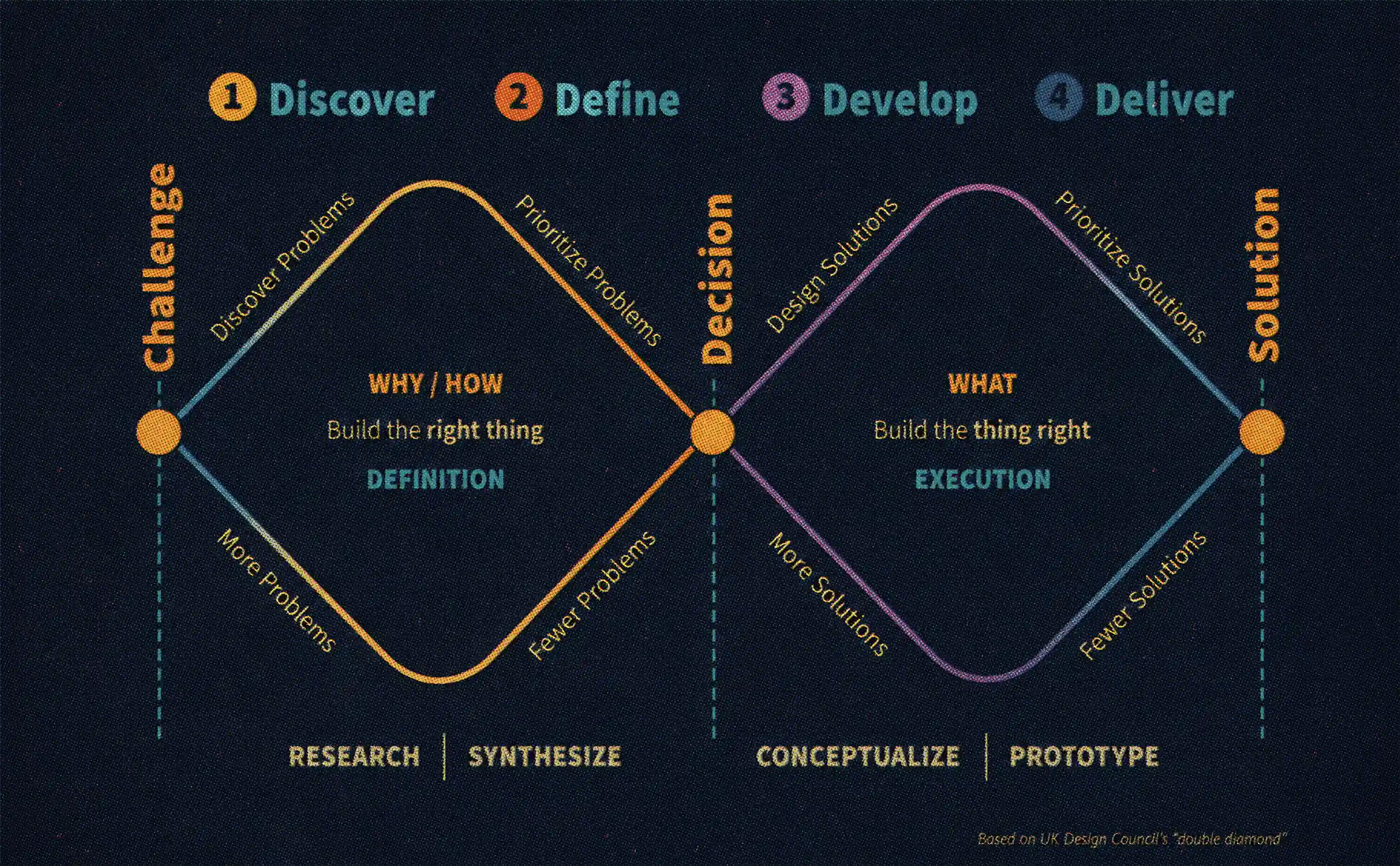
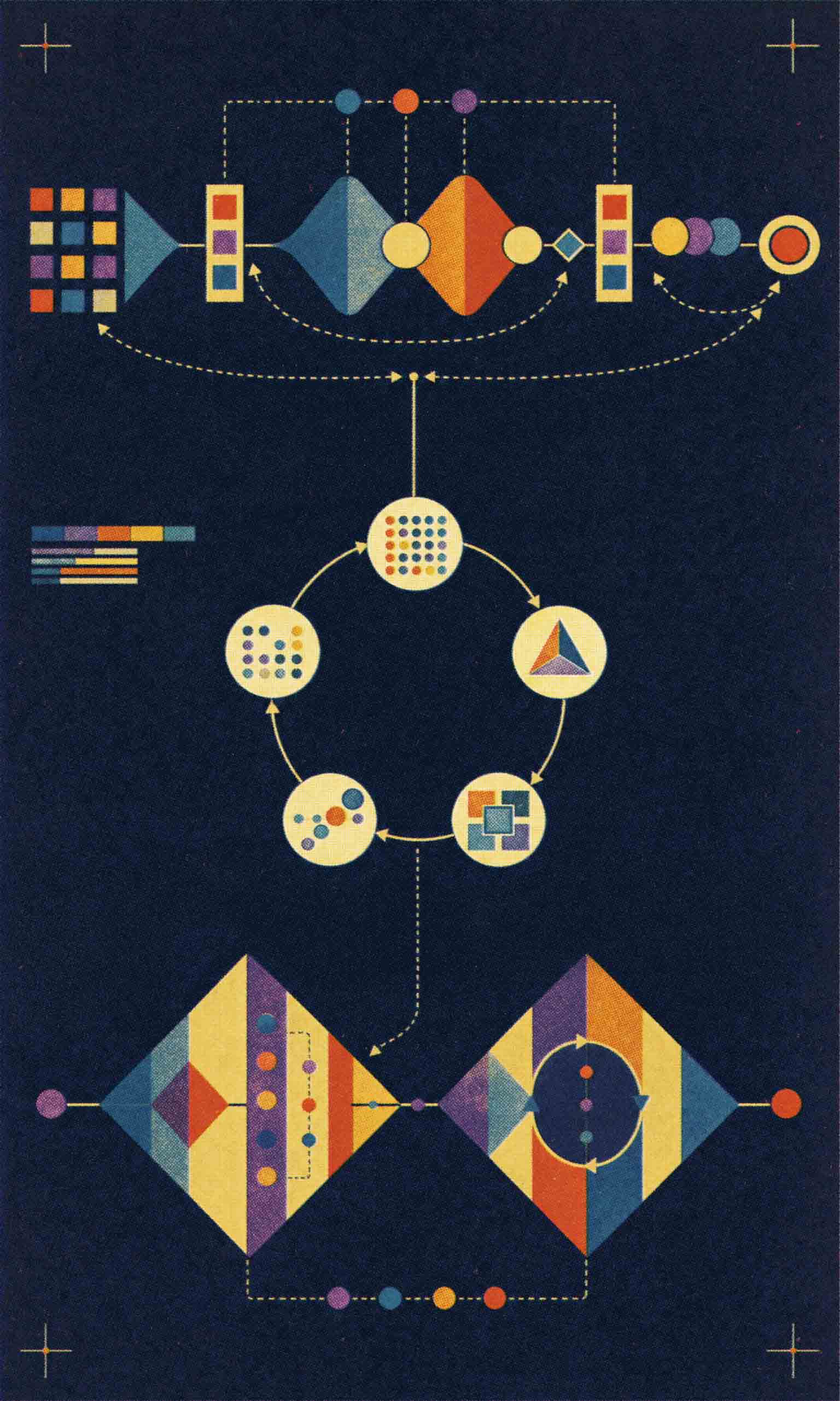
I follow the double diamond framework: Discover, Define, Develop, Deliver. In the process, we diverge to explore the problem space, converge to define it, diverge again to explore solutions, converge to deliver the right one.
A
Discover
Build the Right Thing
Good design decisions come from evidence, not instinct. Before anything gets sketched, I run the research that tells us what's real: what users need, where they struggle, and what the business is trying to accomplish.
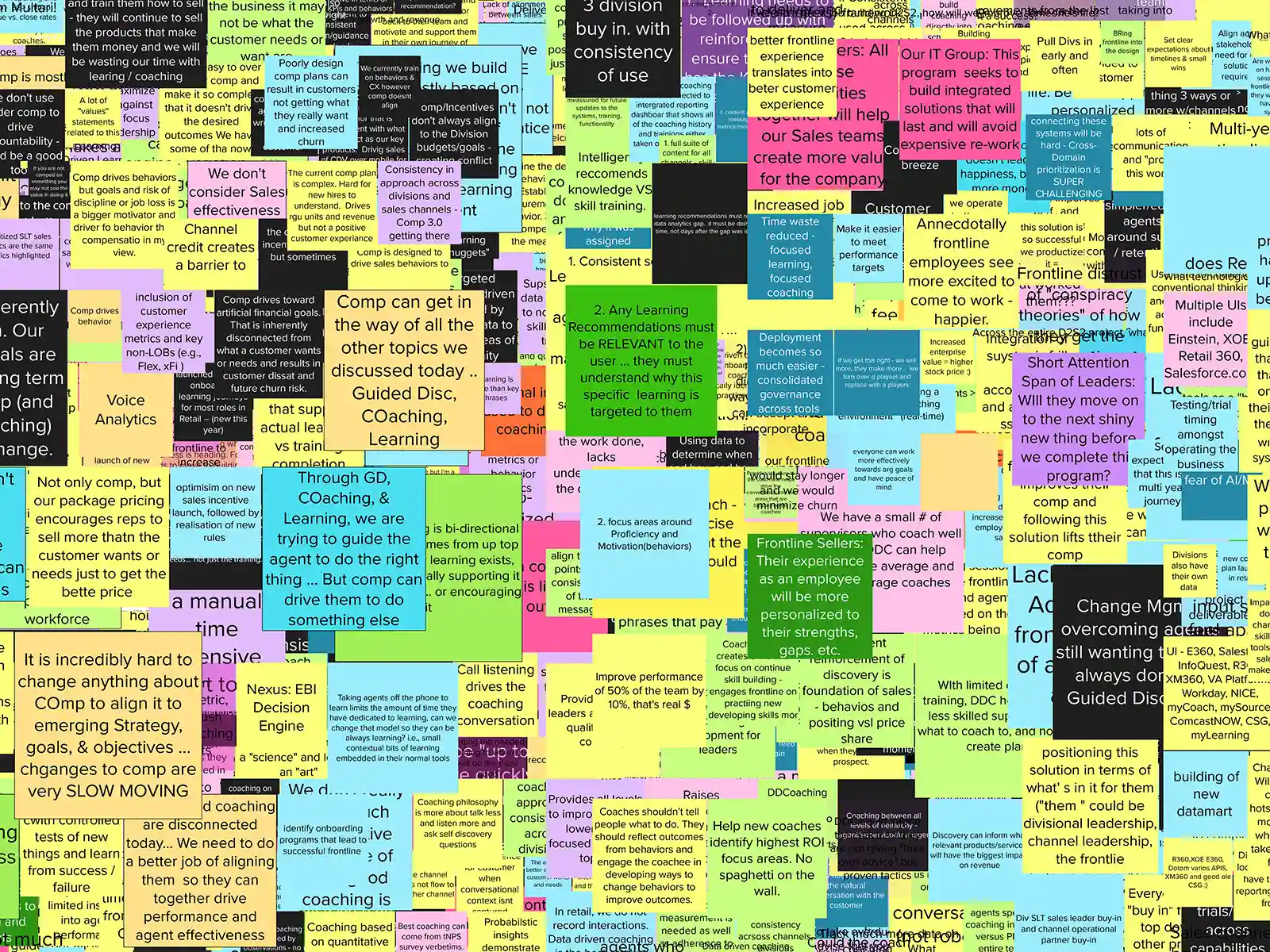
That research takes different forms depending on the project. Sometimes it’s a design thinking workshop with a room full of stakeholders generating hundreds of ideas on sticky notes. Sometimes it’s one-on-one user interviews or usability testing on an existing product. Sometimes it’s empathy mapping or journey mapping to see where the experience breaks down. The method fits the question.
01
Frame
We define what we’re trying to learn and who we need to learn it from. Research without a clear question burns time and produces noise.
02
Gather
I facilitate workshops, run interviews, observe users, and collect the raw signal. Everything gets captured, organized, and reviewed for patterns.
View Case Study >
B
Define
From Signal to Direction
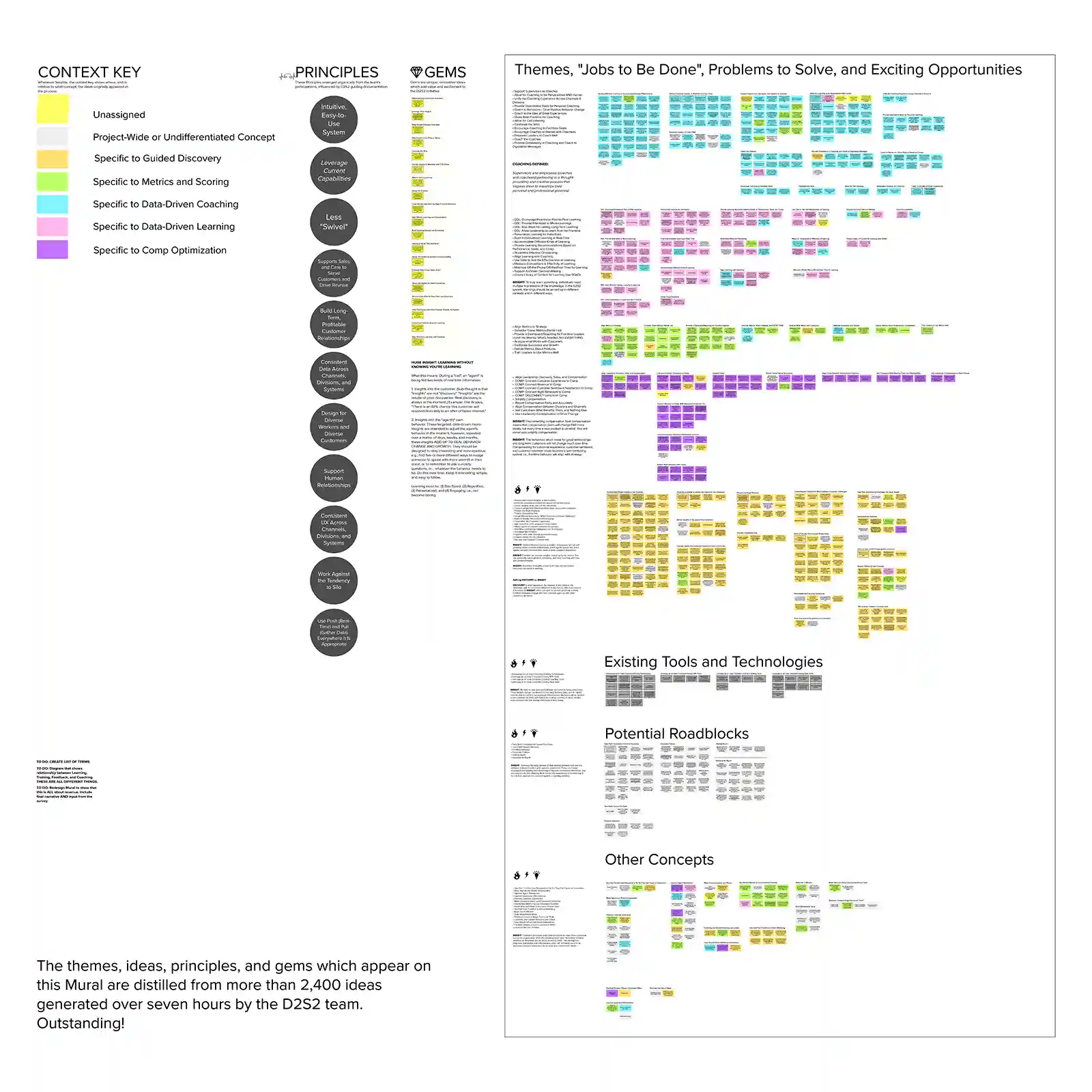
Research produces the insight, and strategy turns it into something the team can act on. This is where the raw findings become Jobs To Be Done, prioritized user needs, and clear requirements that connect what users are struggling with to what the business needs to deliver.
The output here is the bridge between discovery and design. It gives the team a shared target and gives me the criteria to design against, so when we get to mockups, every screen has a reason to exist.
01
Synthesize
We distill the raw findings into themes, pain points, and opportunities, then translate those into Jobs To Be Done: the real tasks users need to accomplish, framed as design targets rather than a feature wish list.
View Case Study >
C
Develop
Two Hours to Alignment
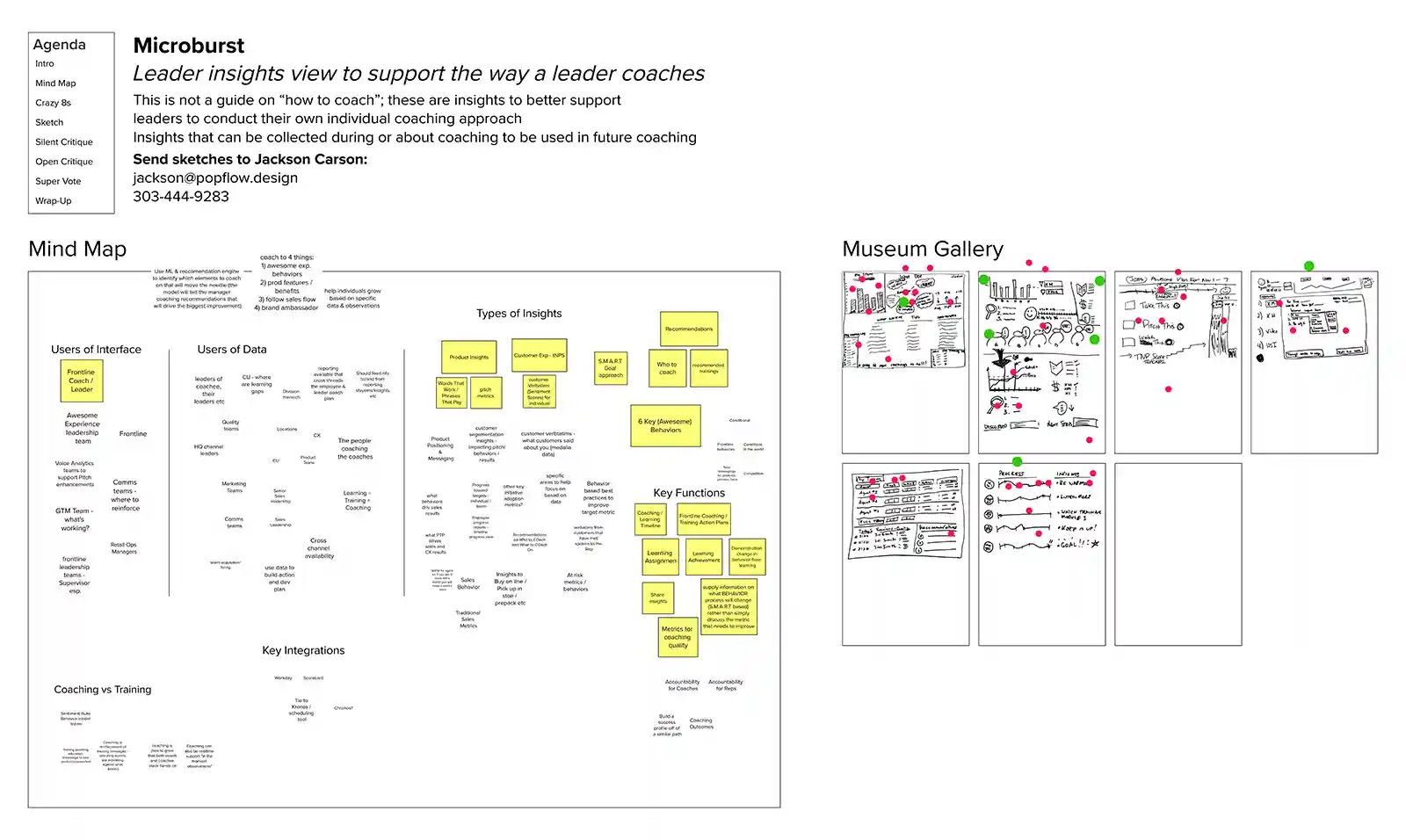
With the problem defined and prioritized, ideas need room to compete. I use a method I adapted from the Google Ventures Design Sprint called the Microburst, a two-hour remote workshop that compresses what normally takes days into a single focused session. Teams walk in with a problem and walk out with a winning concept, stakeholder alignment, and enough clarity to move into design without second-guessing the direction.
I’ve facilitated dozens of these participatory design workshops across industries using digital whiteboards. The Microburst has become a core part of how I approach product engagements, and it’s available as a standalone offering for teams that need to get aligned fast.
01
Diverge
The team sketches competing design directions independently, so ideas get explored on their own merit without groupthink.
02
Converge
Dot voting surfaces the strongest concepts, and the Decider makes the final call. This secures stakeholder alignment early and prevents surprises later.
D
Deliver
Build the Thing Right
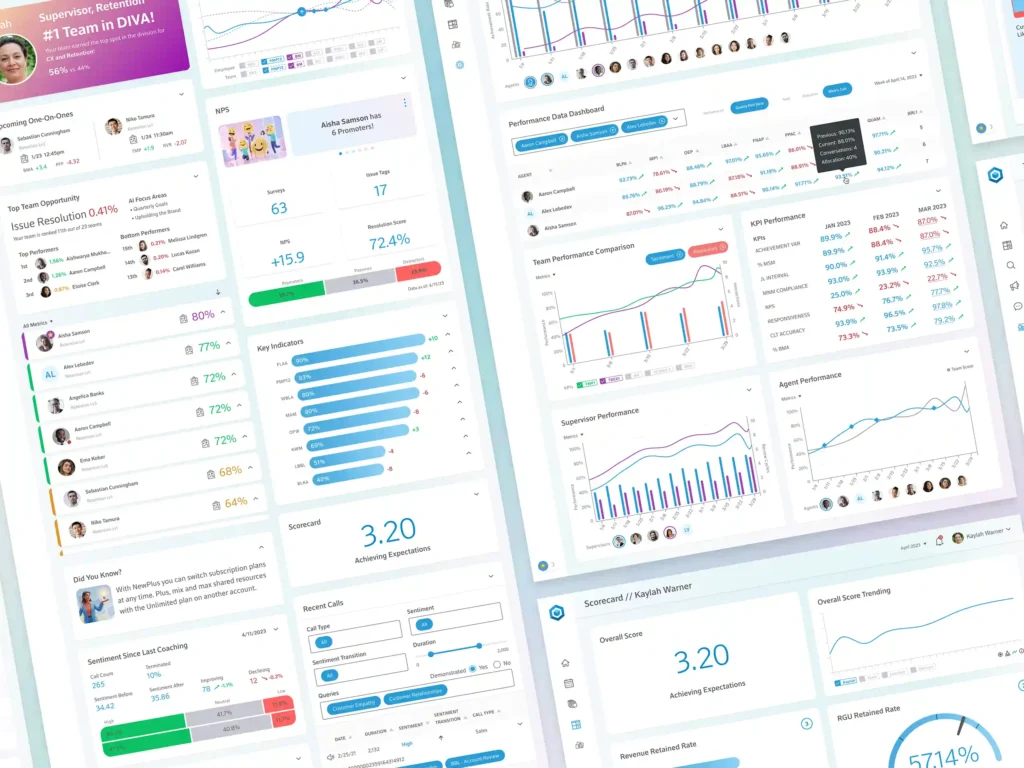
Strategy becomes something people can see, react to, and test. I design in Figma, starting with information architecture, then building up to high-fidelity mockups and interactive prototypes.
Every screen gets tested against the Jobs To Be Done from the strategy phase. If a design doesn’t hold up in usability testing, it gets revised until it does. What ships to engineering is validated work, not a guess.
01
Architecture
I structure the product’s information hierarchy, navigation, and page-level layout so users can find what they need without thinking about it.
02
Design & Prototype
Low-fidelity concepts become high-fidelity mockups, then interactive prototypes. We review together at every stage and adjust as we go.
03
Test & Handoff
I run usability sessions to validate the design with real users, revise what needs revising, and deliver specs and assets developers can build from cleanly.
View Case Study >
Other Services
I also take on ongoing product design partnerships where I stay embedded with a team over months or years, designing new features, running workshops as new problems surface, and evolving the product as the business grows. One of those engagements is approaching its seventh year.
POPflow Makes It.
Simple.
View UX Case Studies
Giant Telco Employee Performance Platform
View >
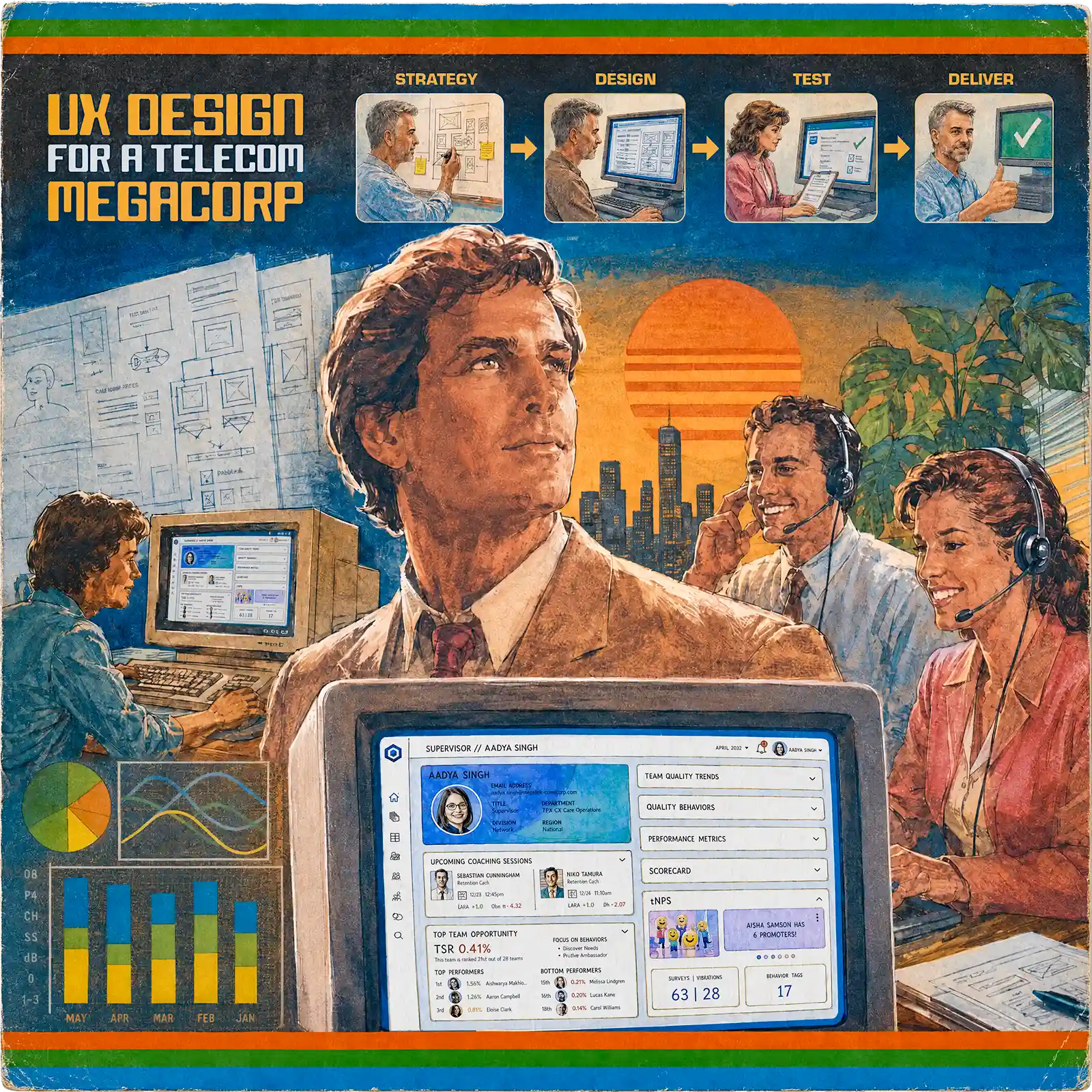
Led the design to consolidate a dozen tools into one unified experience through design thinking workshops, UX design, prototyping, and testing. Now serves 55,000+ frontline agents and leaders at this Fortune 50 telco.
Birth of the Microburst
View >
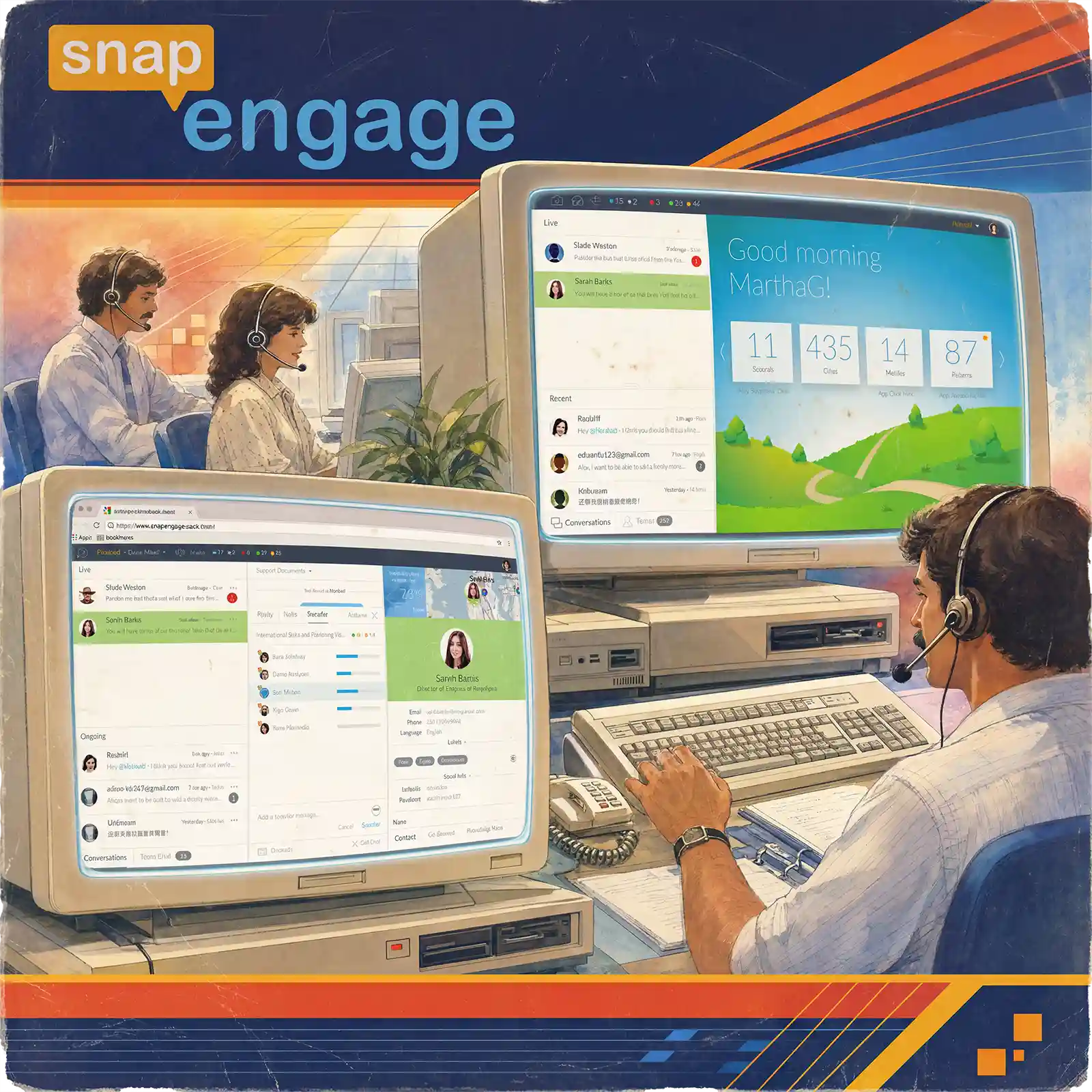
SnapEngage needed to redesign their core product from the ground up. I ran the sprint, designed the solution, tested it with real users, and delivered.
© POPflow Design LLC · MMXXVI
Jackson Carson, President
Center of POPerations:
Longmont, Colorado, USA
POPixel Promise: Our pixels are sourced from Rocky Mountain RGB and CMYK deposits and refined using traditional and contemporary pixellurgical methods. POPixels are guaranteed not to crack or fade for the life of the product, or until your next rebrand, whichever comes first.